
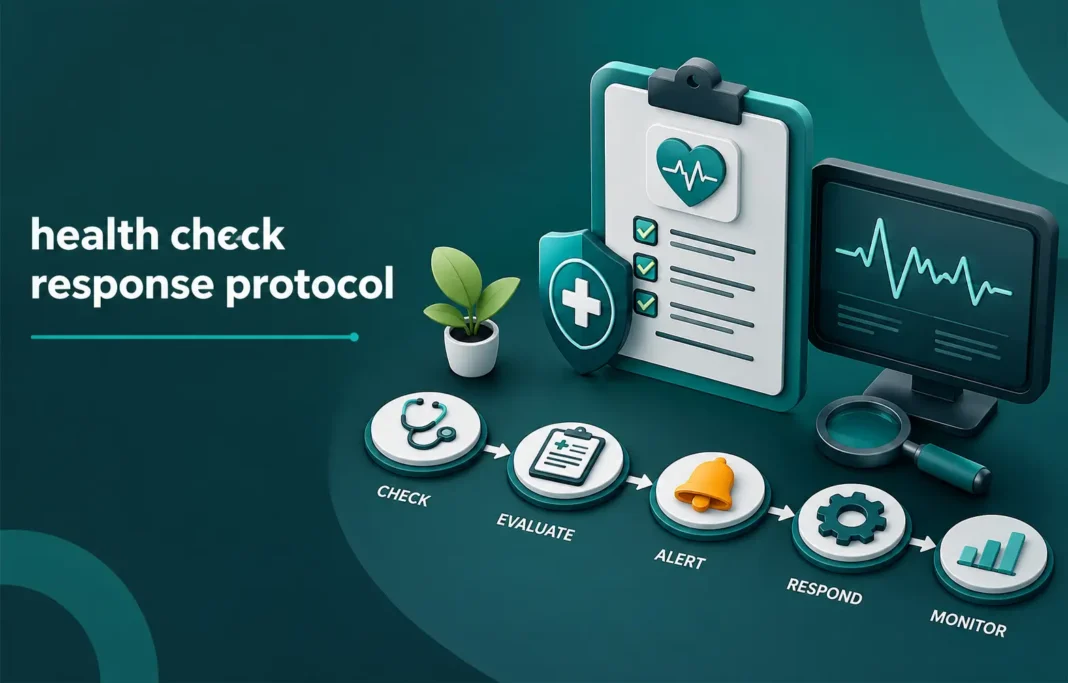

The health check response protocol is a vital part of modern applications, websites, cloud platforms, and network services. It provides a simple way for systems to verify whether an application or service is running correctly and ready to handle requests. From small business websites to enterprise-level cloud infrastructure, health checks help reduce downtime and improve user experience by identifying issues before they become major problems. Understanding this protocol allows developers, IT teams, and system administrators to build reliable environments that remain available even during heavy traffic or unexpected failures.
What Is a Health Check Response Protocol?
A health check response protocol is a standardized method that enables one system to determine whether another system is operating as expected. It works by sending a request to a predefined endpoint and receiving a response that reflects the application’s current status. Most modern web applications expose a dedicated health endpoint that returns information such as availability, uptime, dependencies, and resource status. Load balancers, monitoring platforms, container orchestrators, and cloud services regularly perform these checks to decide whether traffic should continue flowing to a particular server or application instance.
A well-designed health check response protocol goes beyond simply reporting that an application is running. It verifies whether essential components such as databases, cache servers, messaging queues, storage systems, and third-party APIs are functioning correctly. This deeper level of validation helps identify hidden issues before they affect users. For example, an application may appear online while its database connection has already failed, making it unable to process requests successfully. Comprehensive health responses allow monitoring systems to distinguish between healthy, degraded, and unhealthy states. Read More : Refixs2.5.8a Guide: Features, Performance & Benefits
Why the Health Check Response Protocol Is Important
Reliable digital services depend heavily on continuous monitoring, and the health check response protocol plays a central role in achieving that goal. Every second of downtime can affect customer satisfaction, revenue, and business reputation. Health checks provide early warning signals by continuously evaluating whether services are available and responding correctly. Monitoring tools can immediately alert administrators when a service becomes unhealthy, allowing faster investigation and recovery. Automated infrastructure can even restart failed services or redirect traffic without human intervention.
Another important advantage of the health check response protocol is its contribution to automation across modern development environments. Continuous integration and continuous deployment pipelines often rely on health checks to confirm that new releases are functioning properly before directing live traffic to updated applications. Container orchestration platforms automatically replace unhealthy containers based on health check results, reducing manual maintenance efforts. Cloud providers also use these responses to maintain high availability by routing users only to healthy resources.
How the Health Check Response Protocol Works
The health check response protocol follows a straightforward yet highly effective process that helps monitoring systems evaluate the condition of an application or service. A monitoring tool, load balancer, API gateway, or orchestration platform sends a request to a dedicated health endpoint at regular intervals. The application then performs a series of internal checks before returning a structured response that represents its current operational state. These checks may include verifying database connectivity, confirming memory usage remains within acceptable limits, ensuring background services are active, and validating access to external APIs.
Modern implementations of the health check response protocol often distinguish between different types of health evaluations instead of relying on a single status indicator. A basic health check confirms that the application process is running, while a readiness check determines whether the service is fully prepared to receive user traffic. Some environments also include startup checks that verify successful initialization before the application enters production. This layered approach reduces false alarms and prevents partially functioning services from accepting requests prematurely.
Best Practices for Implementing a Health Check Response Protocol
Building an effective health check response protocol requires careful planning rather than simply returning a success message. The health endpoint should respond quickly while checking only the components that directly affect the application’s ability to serve users. Long-running tests or unnecessary database queries can slow down health checks and create additional system load. Clear and consistent response formats make it easier for monitoring tools to interpret results accurately, while meaningful HTTP status codes improve compatibility across different platforms.
Another valuable practice is separating internal diagnostic information from publicly accessible health responses. External users generally require only a simple indication that the service is healthy, whereas internal monitoring systems may need more detailed information about dependencies, resource utilization, and subsystem performance. Logging every failed health check can also provide useful historical data when investigating recurring incidents or performance degradation. Teams should regularly test health endpoints under different operating conditions to ensure they continue functioning during deployments, infrastructure changes, and software updates.
Common Challenges and How to Avoid Them
Although the health check response protocol appears simple, several implementation mistakes can reduce its effectiveness. One common issue is treating every service dependency as equally critical, causing applications to report failure even when minor supporting components experience temporary problems. This can trigger unnecessary alerts, automated restarts, or traffic redirection despite the application remaining capable of serving most user requests. Another frequent mistake involves performing complex operations during every health check, increasing CPU usage and slowing response times.
Maintaining consistency across distributed systems presents another significant challenge, especially in organizations managing multiple microservices or cloud environments. Different development teams may implement health endpoints using different response structures, status codes, or validation logic, making centralized monitoring more difficult. Establishing organization-wide standards helps ensure that every service reports health information in a predictable and compatible format. Documentation should clearly explain what constitutes healthy, degraded, or unhealthy states so operational teams can respond appropriately during incidents. Continuous testing, monitoring, and periodic audits also improve long-term reliability by identifying outdated configurations before they create larger operational problems.
Advanced Use Cases of the Health Check Response Protocol
As organizations expand their digital infrastructure, the health check response protocol becomes even more valuable for supporting complex architectures. In cloud-native environments, health checks are not limited to confirming whether an application is running. They help coordinate traffic distribution, automate scaling decisions, and improve service resilience during deployments. For example, container orchestration platforms use health checks to determine when new application instances are ready to replace older ones, ensuring users experience little or no interruption. Similarly, API gateways rely on health information to avoid routing requests to unavailable services.
Another advanced application of the health check response protocol involves predictive maintenance and intelligent monitoring. Modern observability platforms combine health check data with performance metrics, log analysis, and system alerts to identify patterns that may indicate future failures. Instead of simply reporting whether a service is healthy at a specific moment, these systems provide valuable insights into trends such as increasing response times, resource exhaustion, or repeated dependency failures.
Frequently Asked Questions
1. What is a health check response protocol?
A health check response protocol is a method used by applications and monitoring systems to verify whether a service is operating correctly. It provides a standardized response that indicates if the application is healthy, degraded, or unavailable, allowing automated systems to make informed decisions about traffic routing and service management.
2. Why is the health check response protocol important?
It helps maintain system reliability by detecting problems early, reducing downtime, and enabling automated recovery. Load balancers, monitoring tools, and cloud platforms depend on health checks to ensure users are connected only to healthy application instances.
3. What information should a health check response include?
A health check response should clearly indicate the application’s operational status and may include information about essential dependencies such as databases, cache services, storage systems, and external APIs. Sensitive information should never be exposed through public health endpoints.
4. How often should health checks run?
The ideal frequency depends on the application’s requirements and infrastructure. Critical production systems often perform health checks every few seconds, while less sensitive environments may use longer intervals to reduce unnecessary system load without compromising monitoring effectiveness.
5. Can a health check response protocol improve application performance?
While the protocol itself does not directly increase performance, it contributes to better reliability by identifying failing services quickly. Automated recovery, intelligent traffic routing, and proactive monitoring help maintain consistent performance and reduce the impact of unexpected failures.
Conclusion
The health check response protocol has become a fundamental component of reliable application management, helping organizations monitor service availability, detect issues early, and maintain a seamless user experience. Whether you manage a small website, a cloud-native application, or a large enterprise platform, implementing well-designed health checks improves operational visibility and supports faster recovery during unexpected incidents. By following best practices, validating critical dependencies, and integrating health checks with monitoring and logging systems, businesses can build stronger and more resilient digital services.
As technology continues to evolve, the importance of the health check response protocol will only increase. Investing time in understanding and implementing effective health checks today creates a solid foundation for future scalability, security, and reliability. To continue expanding your knowledge, consider reading related articles on application monitoring, server performance optimization, load balancing, and cloud infrastructure management. These resources will help you build a more dependable and efficient technology environment while supporting long-term business success.