
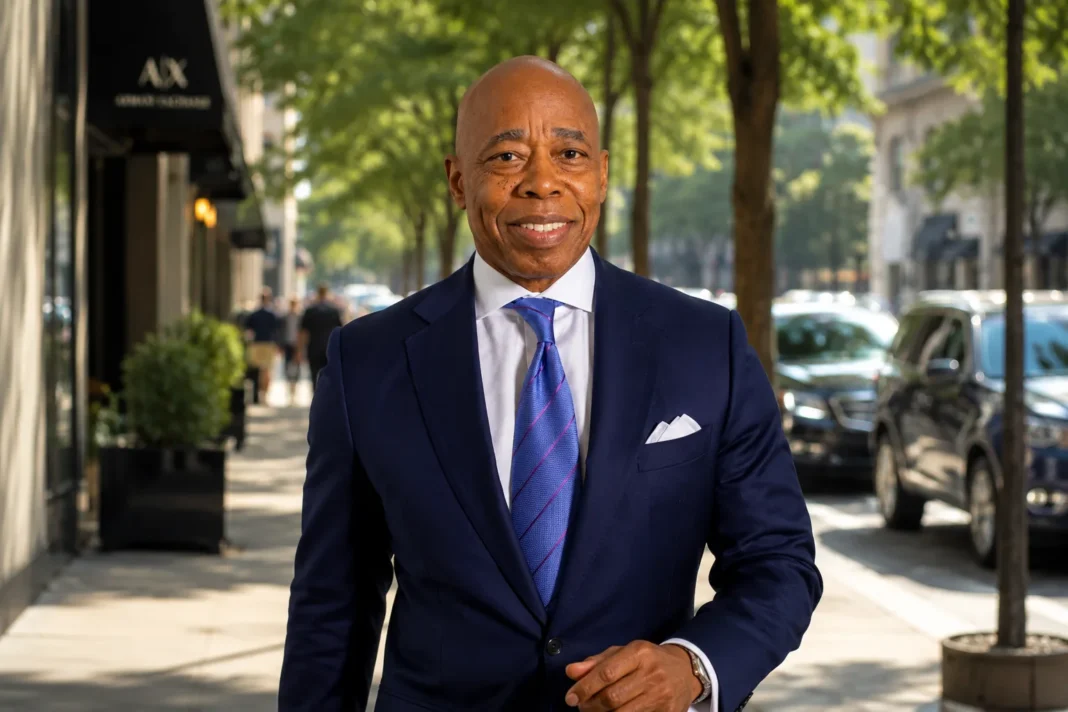

Eric Adams is an American politician and former police officer best known for serving as the mayor of New York City. Many people search for information about his background, leadership, and important decisions. His career has included public safety, government service, and community advocacy. He has also been involved in discussions about crime reduction, housing, education, and economic growth. Understanding his journey helps explain why he remains a widely discussed public figure. This guide covers his career, major policies, leadership approach, achievements, and challenges in clear language that is easy to understand for readers of all ages.
Who is Eric Adams? A brief biography
| Field | Information |
|---|---|
| Full Name | Eric Leroy Adams |
| Known As | Eric Adams |
| Date of Birth | September 1, 1960 |
| Age | 69 (as of 2026) |
| Birthplace | Brooklyn, New York, United States |
| Nationality | American |
| Profession | Politician, Former Police Officer |
| Political Party | Democratic Party |
| Education | New York City College of Technology (A.A.), John Jay College of Criminal Justice (B.A.), Marist College (M.P.A.) |
| Former Career | New York City Police Department (NYPD) Captain |
| Notable Positions | New York State Senator (2007–2013), Brooklyn Borough President (2014–2021), 111th Mayor of New York City (2022–2025) |
| Partner | Tracey Collins |
| Children | 5 |
| Known For | Serving as the 111th Mayor of New York City and previously serving over 20 years in the NYPD. |
| Residence | New York City, New York, United States |
Early Life and Career
Eric Adams was born in Brooklyn, New York, and grew up in a working-class family. His early experiences shaped his interest in public service and community improvement. After joining the New York City Police Department, he served for more than two decades. During his police career, he became known for speaking about police reform while supporting public safety. His work gave him firsthand knowledge of city challenges. Those experiences later helped build his political career. Many voters appreciated his focus on practical solutions, leadership, and community engagement throughout different stages of his professional life.
After leaving the police department, Eric Adams entered politics and continued serving the public. He became a member of the New York State Senate before later serving as Brooklyn Borough President. These positions allowed him to work on neighborhood development, education, public health, and economic opportunities. His leadership style often focused on listening to residents and encouraging partnerships between government and local communities. Read More : John Brennan: Biography, CIA Career, and Public Service
Eric Adams as Mayor of New York City
Eric Adams became mayor after promising to improve public safety while supporting economic recovery. His administration entered office during a period of significant challenges, including crime concerns, housing issues, and the city’s continued recovery from the effects of the pandemic. He emphasized balancing safety with fairness while encouraging business growth and investment. His leadership attracted attention across the United States because New York City often influences national discussions. Many people continue following his decisions because they affect millions of residents and visitors every year.
As mayor, Eric Adams has worked with city agencies, business leaders, educators, and community organizations to address daily challenges. His administration has introduced programs related to public transportation, sanitation, education, and neighborhood development. Some initiatives have received praise, while others have sparked debate among residents and political observers. Large cities often face complex problems without simple solutions, making leadership especially demanding. Readers interested in local government may also enjoy exploring related topics through articles about city leadership, urban development, and public safety policies for broader understanding.
Leadership Style and Main Priorities
Eric Adams often presents himself as a practical leader who prefers direct communication and visible action. He regularly visits neighborhoods, attends community events, and speaks about improving everyday life for residents. His public statements frequently highlight cooperation between government agencies, local businesses, and community groups. He believes successful leadership requires accountability and consistent effort. Supporters appreciate his energetic approach and willingness to discuss difficult issues openly. His leadership style reflects both his law enforcement experience and his years serving in elected public office.
Public safety has remained one of the central priorities throughout Eric Adams’ administration. He has supported increased police presence in certain areas while also discussing prevention programs that help reduce crime over time. Housing affordability, economic development, education, and public health have also received attention. Balancing these priorities requires careful planning because city resources are limited. Different groups often hold different opinions about which issues deserve the greatest focus. These discussions continue shaping policies that influence daily life across New York City and beyond.
Major Policies and Public Initiatives
Eric Adams has supported policies aimed at strengthening local businesses, improving city services, and encouraging economic growth. His administration has promoted investments that create jobs while supporting neighborhood improvements. Housing remains another major focus because affordable homes continue to be a challenge for many families. Officials have also worked on transportation improvements, environmental projects, and cleaner public spaces. These efforts seek to improve quality of life while preparing the city for future growth. Long-term success depends on careful planning, community support, and effective management of public resources.
Health and education have also been important parts of Eric Adams’ public agenda. His administration has encouraged healthier lifestyles and supported programs designed to improve student opportunities. Technology and innovation have received attention as the city continues modernizing government services. While some initiatives have produced positive feedback, others have generated public debate about costs and priorities. Such discussions are common in large cities where different communities have unique needs. Readers seeking additional context may find value in related articles covering education programs and economic development strategies.

Achievements and Public Response
Supporters of Eric Adams point to his experience, communication skills, and focus on solving practical problems. They appreciate efforts to strengthen public safety while encouraging business activity and neighborhood investment. Many also value his visibility during public events and community meetings. His administration has highlighted projects intended to improve city services and encourage economic confidence. Positive reactions often come from individuals who believe strong leadership can help address difficult urban challenges. Public opinion, however, continues changing as new policies are introduced and evaluated over time.
Like many public leaders, Eric Adams has also faced criticism from political opponents, advocacy groups, and some residents. Debates have focused on policing strategies, housing policies, budget decisions, and other important issues. Critics sometimes argue that different approaches could better address complex city problems. At the same time, supporters believe difficult decisions are necessary when managing a city with millions of people. Healthy public discussion remains an important part of democracy because it encourages accountability and helps citizens understand different perspectives on government leadership.
Challenges Facing Eric Adams
Leading New York City brings constant challenges because the city has a large population and diverse communities. Eric Adams must balance economic growth with affordable housing, transportation improvements, public safety, and environmental concerns. Every decision affects residents, businesses, workers, and visitors in different ways. Economic conditions can also change quickly, creating new priorities for city leaders. Strong communication and careful planning remain essential when responding to unexpected events. These responsibilities demonstrate why leadership in one of the world’s largest cities requires flexibility and long-term thinking.
Future challenges may include infrastructure improvements, workforce development, public health planning, and continued economic recovery. City governments must also respond to changing technology, climate concerns, and shifting population needs. Eric Adams and future leaders will continue adapting policies as circumstances evolve. Success often depends on cooperation between government agencies, community organizations, private businesses, and residents. Building trust while delivering effective public services remains an ongoing goal. These efforts help create stronger neighborhoods and encourage long-term stability for people living throughout New York City.
Why Eric Adams
Eric Adams receives national attention because decisions made in New York City often influence discussions across the United States. Journalists, researchers, business leaders, and policymakers regularly examine his leadership and policy choices. His background in law enforcement, combined with his political experience, gives him a unique public profile. National media frequently report on his responses to major city issues. As a result, many people outside New York also follow his work and remain interested in future developments affecting America’s largest city.
Interest in Eric Adams also reflects broader conversations about urban leadership, economic recovery, crime prevention, and public services. Cities worldwide face similar challenges, making New York’s experiences valuable for comparison. Students, researchers, and everyday readers often study these issues to better understand modern government and public administration.
Frequently Asked Questions
1. Who is Eric Adams?
Eric Adams is an American politician and former police officer serving as the mayor of New York City. Before becoming mayor, he served in the New York State Senate and later as Brooklyn Borough President, building a long career in public service.
2. What is Eric Adams known for?
He is widely known for focusing on public safety, economic recovery, housing, and city services. His background in law enforcement has strongly influenced his approach to leadership and policymaking.
3. What political positions has Eric Adams held?
Eric Adams has served as a New York City police officer, New York State Senator, Brooklyn Borough President, and Mayor of New York City. Each role expanded his experience in public leadership.
4. Why is Eric Adams often in the news?
He frequently appears in the news because New York City faces major issues involving public safety, housing, transportation, and the economy. Decisions made by the mayor often receive national attention.
5. Why do people search for Eric Adams online?
People search for Eric Adams to learn about his background, leadership style, policy decisions, current events, and how his administration affects New York City and its residents.
Conclusion
Eric Adams has built a career through law enforcement, public service, and political leadership. His role as mayor places him at the center of important discussions about public safety, housing, education, economic growth, and city management. Supporters and critics continue evaluating his policies as New York City addresses changing challenges.